
Disclosure: This post may contain affiliate links. As an Amazon Associate, we earn from qualifying purchases—at no extra cost to you.

If there’s one thing that instantly takes me back to my Georgia roots, it’s the smell of fresh yeast bread baking in the oven. Growing up, yeast bread recipes weren’t just for holidays — they showed up on our table for everything from Saturday brunch to midweek chili night. My grandmother always had yeast rising under a warm towel and didn’t need a timer to know when it was ready. That instinct was passed to my mother, and eventually, to me. As a chef in Austin now, I’ve spent over two decades exploring how to strike the perfect balance between classic bread-making and modern kitchen hacks.
In this guide to yeast bread recipes, I’ll share not just instructions, but insights and flavor ideas honed through real-life kitchen experiments. You’ll find beginner bread techniques, rising tips, focused ingredients, and variations — all optimized for home bakers wanting consistent, golden loaves every time. Whether you’re curious about the science behind yeast or want to impress family with your fluffy Parker House rolls, this is for you.
Let’s get baking.
The Art of Starting with Yeast
Why Yeast Bread Recipes Feel Like Home
Yeast bread recipes create more than food — they build experiences. That unmistakable scent of warm dough reminds many of Sunday suppers or cozy snow days. In my house, kneading dough wasn’t a chore — it was therapy. Fresh-from-the-oven bread has the power to slow life down and bring loved ones in from every corner of the house.
Making bread from yeast draws on a centuries-old method, where you mix simple ingredients and patiently allow life (yes, yeast is alive) to do its magic. Even with all the new gadgets and speedy dinner hacks, yeast bread holds unique charm. From fluffy buns to chewy focaccia, the technique opens up a whole world of flavor. Getting hands-on with dough, watching it rise, and smelling it bake is a full sensory experience.
One of my favorite yeast creations is these soft dinner rolls that stay pillowy even the next day. They hit the sweet spot between nostalgia and weeknight ease. If you’re after something equally nostalgic but with flair, these Parker House Rolls will look like they took hours but are surprisingly beginner-friendly.
Understanding Types of Yeast for Better Results
All yeast isn’t created equal. In most modern yeast bread recipes, you’ll see two types mentioned: active dry yeast and instant yeast. Both bring dough to life but work a little differently.
Active dry yeast needs to be “proofed” — mixed with warm water and a bit of sugar to activate it. Once it bubbles, you’re good to mix it with your flour.
Instant yeast, also known as quick-rise or bread machine yeast, skips the proofing step and mixes straight in with dry ingredients. It rises faster and gives you a shorter prep time, making it ideal for weeknights.
If you’re ever unsure about the yeast type you’re using, a digital thermometer like this one can be a lifesaver since water that’s too hot will kill it, and too cold won’t activate it. Aim for 100°F–110°F water for optimal yeast performance.
Ready to start baking? Let’s dive in with a classic everyday loaf recipe perfect for any level of baker.
Foolproof Everyday Yeast Bread
Ingredients List for Classic White Yeast Bread
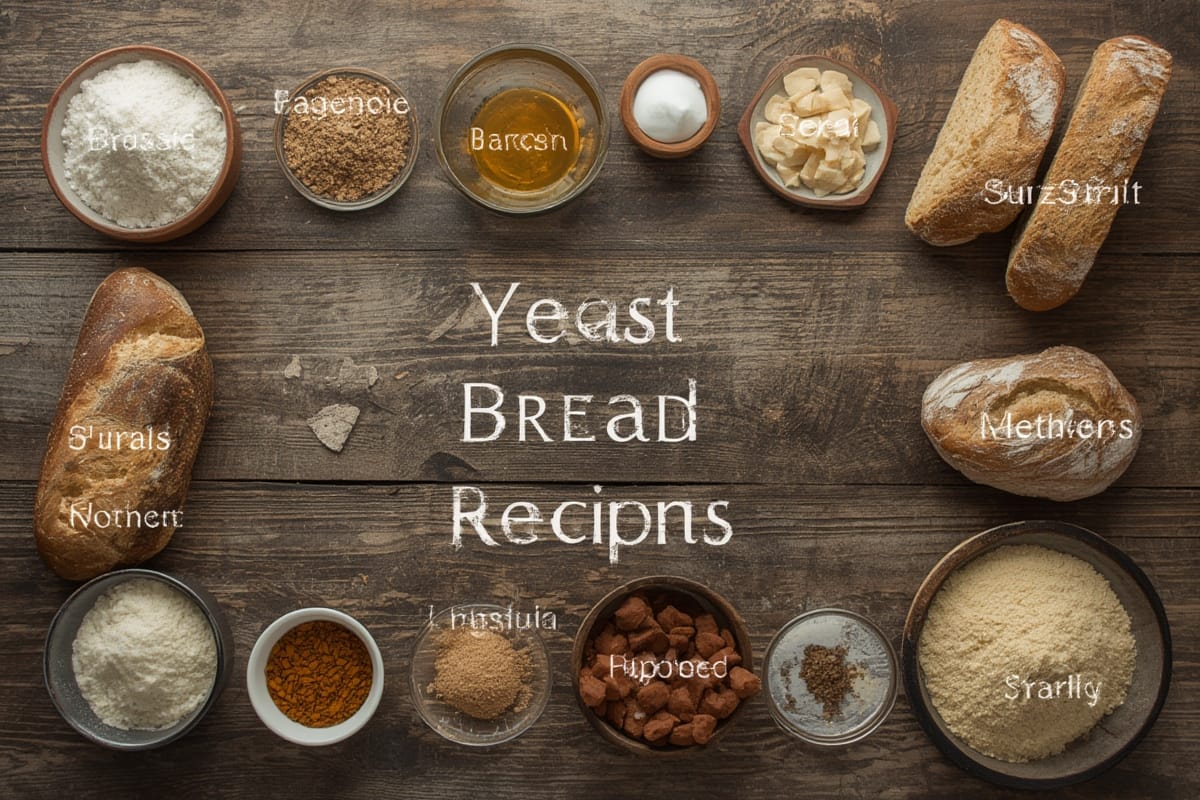
Here’s what you’ll need for one medium loaf:
| Ingredient | Amount |
|---|---|
| Bread flour (OR all-purpose flour) | 3 ½ cups |
| Warm water (100°F–110°F) | 1 ¼ cups |
| Active dry yeast | 2 ¼ teaspoons (one packet) |
| Cane sugar or honey | 2 tablespoons |
| Salt | 1 ½ teaspoons |
| Neutral oil or melted butter | 3 tablespoons |
You can also explore higher-protein options like zero-carb yogurt bread if you’re watching macros.
Timing and Technique: From Mixing to Serving
Prep Time: 15 minutes
Rise Time: 60–90 minutes
Bake Time: 30 minutes
Total Time: 1 hour 45 minutes
Not bad when you think about it — that’s 20% faster than the average old-school recipe thanks to instant yeast and a warm kitchen.
Step-by-Step Instructions
- In a large mixing bowl, activate the yeast by combining it with warm water and sugar. Let it rest for 5–10 minutes until frothy.
- Stir in salt and oil, then gradually add flour. Mix until a dough forms.
- Knead on a floured surface or in a stand mixer (a dough hook like this one helps) for 8–10 minutes until smooth and elastic.
- Shape the dough into a ball, place it in a greased bowl, and cover with a damp cloth. Let it rise in a warm spot until doubled.
- Punch down, shape into a loaf, and place it into a greased bread pan.
- Let it rise again for 30 minutes. Preheat your oven to 375°F during the second rise.
- Bake for 30 minutes until golden brown and the loaf sounds hollow when tapped.
- Cool before slicing — if you can wait!
For enriched dough variations, try cinnamon raisin bread or cinnamon apple bread. They follow the same process with flavorful mix-ins.
Creative Yeast Variations You Can Try
Flatbreads, Focaccia & Flavorful Infusions
Once you’ve got the basic yeast bread recipe under your belt, it’s time to expand your repertoire. Yeast dough is incredibly adaptable. Try rolling it out and brushing it with olive oil, garlic, and herbs for an easy focaccia bread that crackles at the edges and stays chewy in the middle.
You can experiment with adding chopped olives, sundried tomatoes, or even grated carrots into the dough. Want to go bold? Tuck whole roasted garlic cloves into your next bake or riff on garlic bread that uses soft yeast rolls instead of standard baguette.
As you explore, a quality proofing container (like this one) ensures your dough rises evenly and doesn’t develop a crust before baking.
The Science of a Good Rise
Rising, or fermentation, is the most critical stage in mastering yeast bread. Yeast consumes sugars in the dough and releases carbon dioxide, creating those airy bubbles. Factors affecting rise include dough hydration, temperature, and even altitude.
For best results, let your dough rise in a warm (but not hot) area — around 75°F to 80°F. If your kitchen is chilly, placing the dough inside a turned-off oven with the light on or using a bread proofing box keeps the environment consistent.
This scientific guide from Colorado State University explains common yeast reactions and can help you troubleshoot issues like overproofing or poor oven spring.
FAQs About Yeast Bread Recipes
What are basic yeast bread recipes for beginners?
Start with a simple sandwich loaf or dinner rolls. The fewer mix-ins and shaping steps, the better. Recipes like white pan bread or easy dinner rolls are great starting points.
How long does yeast bread need to rise?
Generally 60 to 90 minutes for the first rise and 30–45 minutes for the second. Warmer kitchens make it quicker.
What is the difference between active dry and instant yeast?
Active dry yeast needs to be proofed, while instant yeast can be mixed directly into the dough. Instant usually rises dough faster.
Why doesn’t my yeast bread rise properly?
Most often, this happens due to expired yeast, cold water, or placing dough in a chilly spot. Check yeast freshness and dough temperature.
Conclusion: Make Space for Bread in Every Week
Baking your own yeast bread isn’t just about food — it’s about slowing down, connecting, and creating something beautiful from humble ingredients. Whether you’re kneading traditional loaves or adapting trendy fillings, the satisfaction of slicing into a warm, homemade bread loaf is unmatched. Embrace it, experiment boldly, and don’t be afraid to get your hands messy. Yeast bread recipes aren’t reserved for chefs — they’re for anyone with a passion for flavor and a little patience.
PrintClassic Yeast Bread
- Total Time: 1 hour 45 minutes
- Yield: 1 medium loaf 1x
Description
Simple, fluffy and foolproof white yeast bread recipe perfect for beginner or experienced bakers alike.
Ingredients
3 ½ cups bread flour or all-purpose flour
1 ¼ cups warm water (100°F–110°F)
2 ¼ teaspoons active dry yeast
2 tablespoons sugar or honey
1 ½ teaspoons salt
3 tablespoons neutral oil or melted butter
Instructions
In a large bowl, mix warm water, sugar, and yeast. Let sit for 5–10 minutes until foamy.
Add salt, oil, and flour gradually, stirring to blend into a dough.
Knead 8–10 minutes by hand or using dough hook until elastic.
Place dough in greased bowl, cover, and let rise for 1 hour or until doubled in size.
Punch down, shape dough, and place in greased loaf pan.
Let rise for 30 minutes. Preheat oven to 375°F.
Bake for 30 minutes or until golden and sounds hollow.
Cool slightly before slicing and serving.
Notes
For richer texture, substitute ½ cup of flour with whole wheat flour.
Brush top with olive oil or plant-based butter straight out of the oven for a glossy finish.
- Prep Time: 15 minutes
- Cook Time: 30 minutes
- Category: Bread
- Method: Baked
- Cuisine: American
Nutrition
- Calories: 160
- Fat: 4g
- Carbohydrates: 26g
- Fiber: 1g
- Protein: 4g
- Cholesterol: 0mg
Keywords: yeast bread recipes, beginner white bread, easy sandwich loaf, homemade bread, active yeast bread