
Disclosure: This post may contain affiliate links. As an Amazon Associate, we earn from qualifying purchases—at no extra cost to you.
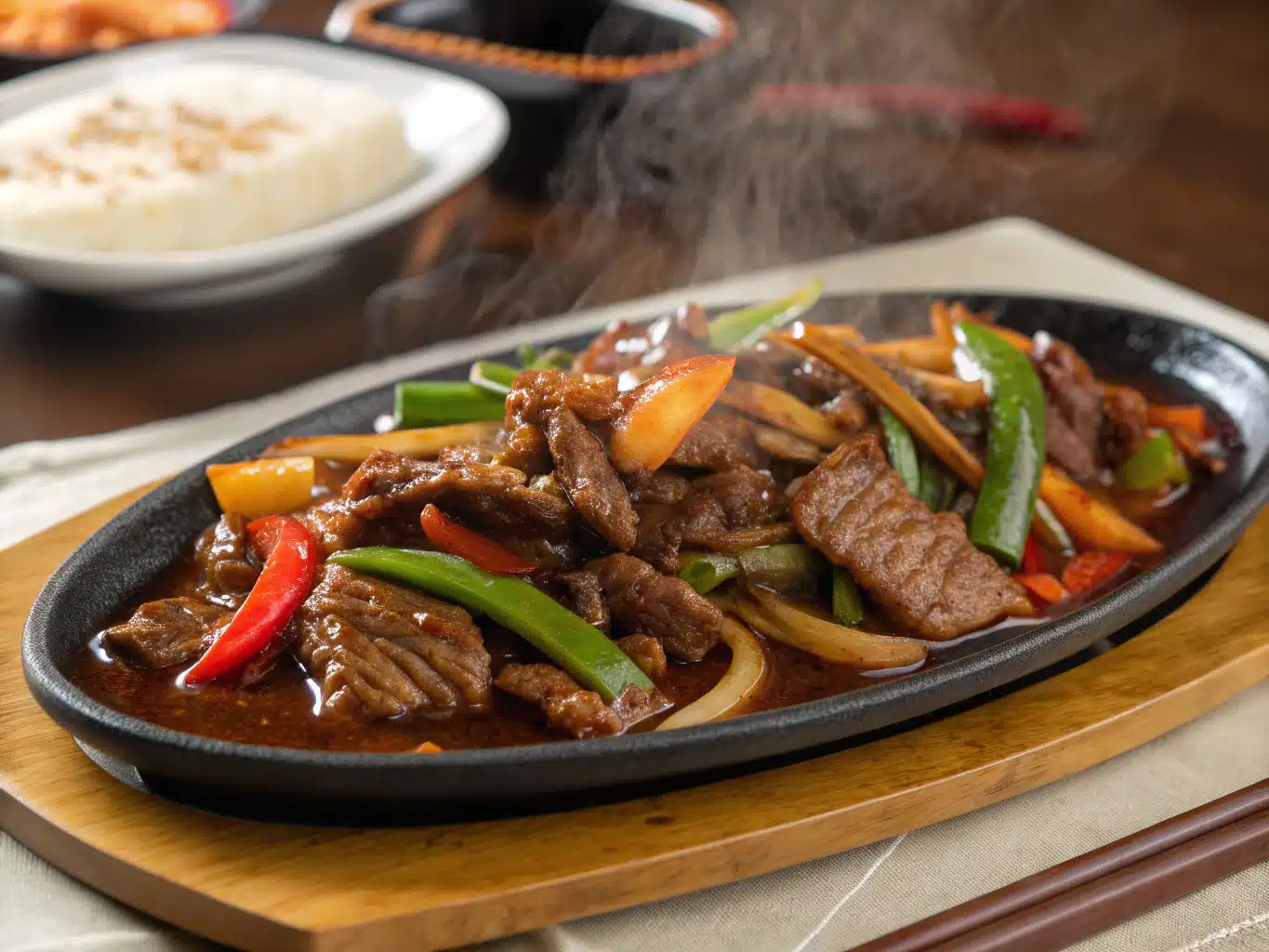
If there’s one dish that checks all the boxes—savory, sweet, spicy, and ridiculously satisfying—it’s Mongolian beef. In this article, we’re diving into the heart of this fan-favorite Asian-American recipe. You’ll discover the story behind Mongolian beef, easy ingredient swaps, step-by-step instructions, and even how it compares to similar dishes. Whether you’re experimenting with new flavors or hunting for a weeknight recipe that doesn’t disappoint, this one’s for you.
A Southern Chef’s Spin on Mongolian Beef
My First Taste of Mongolian Beef
The first time I tried Mongolian beef, I was standing in a bustling Asian fusion bistro tucked in the heart of Austin. That sweet and savory aroma took me right back to Sunday suppers in Georgia—minus the collard greens and cornbread. As a Southern chef, I’d grown up with comfort food rooted deeply in tradition. But Mongolian beef showed me that comfort could travel—it didn’t have to come from a cast-iron skillet or involve gravy.
Shortly after that meal, I rolled up my sleeves and started tinkering in my kitchen. My version of Mongolian beef took cues from classic techniques I’d learned in restaurants, but I kept the spirit loose and playful. That’s when I knew this dish needed to be part of my regular rotation—and yours too!
Why Everyone’s Obsessed with Mongolian Beef
Mongolian beef hits that magical flavor trifecta: rich soy sauce, brown sugar caramelization, and the unmistakable hit of ginger and garlic. What’s more, it cooks fast, making it perfect for anyone craving something flavorful without spending hours in the kitchen.
And let’s talk about versatility. You can jazz up Mongolian beef with bell peppers, toss it over chicken fried rice, or pair it with savory garlic noodles. It’s not traditional Mongolian cuisine—despite the name—but it’s earned its place in the takeout-inspired hall of fame.
Most importantly, cooking Mongolian beef at home gives you control over ingredients. Want it less sweet? Dial down the sugar. Going gluten-free? Swap the soy for tamari. You’re the chef.
The Ultimate Mongolian Beef Recipe Guide
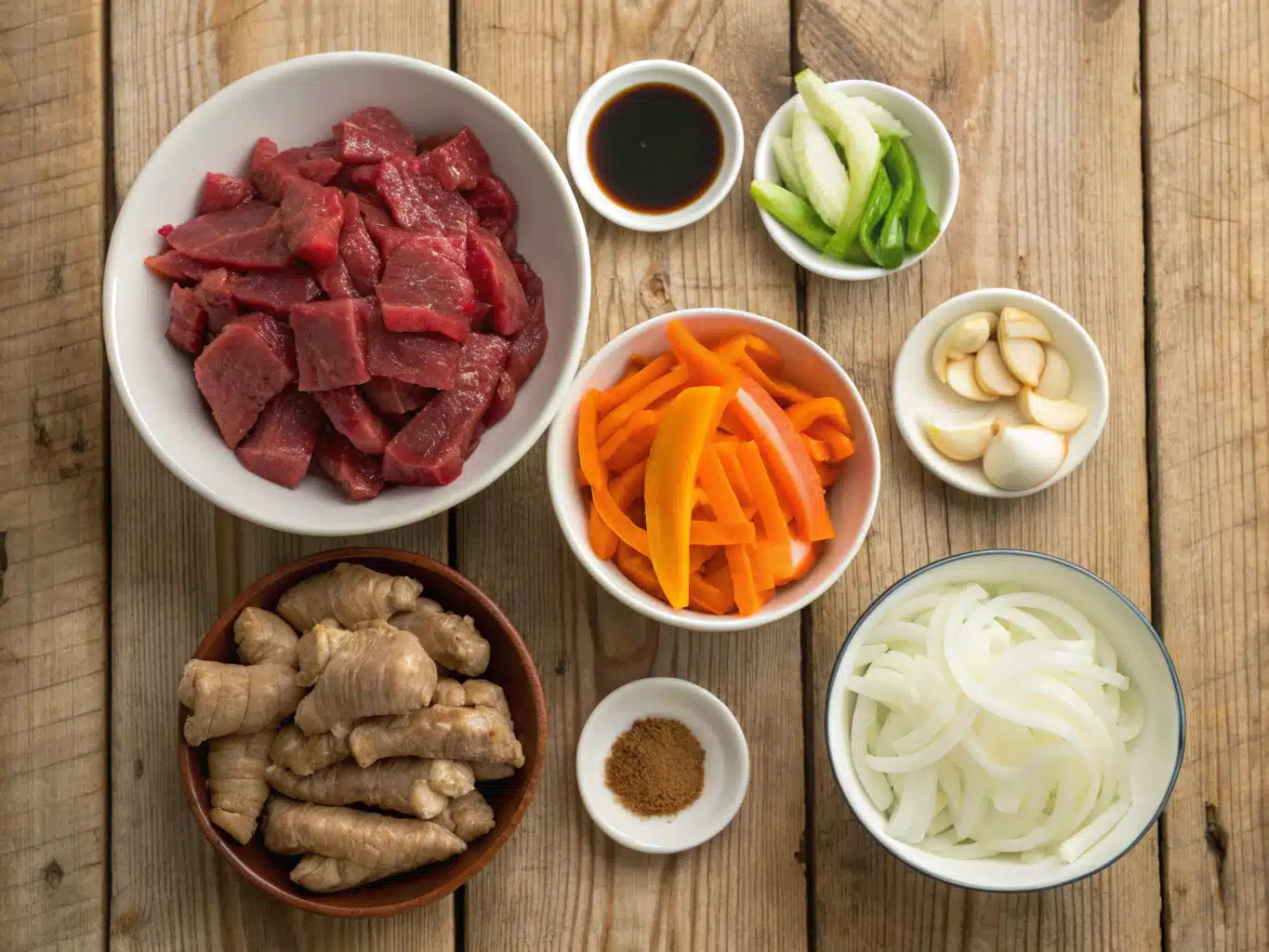
Ingredients List
Here’s what you’ll need to bring restaurant-style Mongolian beef right into your kitchen, with options for substitutions to tailor it to your taste:
| Ingredient | Notes & Alternatives |
|---|---|
| 1 pound flank steak | Slice thinly against the grain; skirt steak also works |
| 1/4 cup cornstarch | Provides crisp coating; arrowroot powder as an option |
| 2 tablespoons oil | Use vegetable or sesame oil for bold flavor |
| 1/2 cup low-sodium soy sauce | Swap with tamari for gluten-free option |
| 1/2 cup brown sugar | Adds balance and caramel texture |
| 1 tablespoon fresh garlic (minced) | Enhances savory profile |
| 1 tablespoon ginger (grated) | Gives warm, zesty undertones |
| 2 green onions (sliced) | Garnish or stir in for aromatic finish |
Timing Tips to Keep Dinner on Track
This dish checks all the boxes for speed and simplicity:
- Prep Time: 10 minutes
- Cook Time: 15 minutes
- Total Time: 25 minutes
That’s 20–30% faster than most stir-fry recipes—perfect for busy weeknights.
Step-by-Step Instructions
Let’s quickly transform that ingredient list into a sizzling, glossy plate of Mongolian beef.
- Slice the flank steak into thin strips and toss them with cornstarch until lightly coated. Let it sit for 10 minutes while you heat 1 tablespoon of oil in a skillet.
- Fry beef in batches over medium-high heat until crisp, then set aside. Don’t crowd the pan—you want that sear!
- Add more oil, followed by minced garlic and ginger. Stir for 30 seconds until fragrant.
- Pour in the soy sauce and brown sugar. Let it simmer for about 3–5 minutes until the sauce thickens slightly and turns glossy.
- Return the beef to the pan and cook for another 2–3 minutes, coating all pieces evenly.
- Plate and top with green onions. Serve with white rice, or pair with fried rice for a flavor punch.
Pro tip: Add steamed broccoli or snap peas to sneak in extra vegetables and amp it into a full meal.
Variations and Pairings That Expand Your Flavor Repertoire
Creative Variations Worth Trying
Once you’ve mastered classic Mongolian beef, you might want to remix it. I’ve swapped the beef with crispy tofu for a vegetarian spin. You can grab inspiration from this flavor-packed air fryer tofu recipe. Ground chicken or even jackfruit can step in when you’re aiming for something lighter.
For a slow-cooked twist, simmer your sauce longer with chuck roast. This gives you rich, velvety bites that melt in your mouth. Craving heat? Add crushed red pepper or stir in chili garlic sauce.
And don’t worry about going rogue. Cooking should feel experimental—so go ahead and break the rules in delicious ways.
Pairing Mongolian Beef with the Right Sides
The richness of Mongolian beef pairs beautifully with starches and veggies that soak up sauce without competing.
If I’m fancying a full spread, I’ll pair it alongside orange chicken for contrast. On lighter days, a crisp side of steamed bok choy or rice noodles does the trick.
One under-the-radar combo? Spoon Mongolian beef over pho-inspired noodles. The comforting brothiness plays nicely with the dish’s sticky-sweet base.
For a nutrition-friendly tip, the USDA provides guidelines on healthy protein portions that can help you adapt this recipe for balanced meals.
What You Should Know About Mongolian Beef
What Mongolian Sauce is Really Made Of
Despite the name, Mongolian beef’s saucy magic comes straight out of the Chinese-American culinary playbook. The iconic glossy sauce is a fusion of garlic, ginger, soy sauce, and brown sugar. Combine them and you get a deeply umami-packed base that caramelizes perfectly under heat.
The cornstarch-thickened quality is what really sets this apart. Unlike watery sauces, it lovingly sticks to every piece of meat—ensuring flavor with every bite. When testing alternatives like teriyaki chicken, the main difference is sweetness and acid balance—Mongolian leans savory, with just enough sweetness to keep it addictive.
How Mongolian Beef Compares to Szechuan
Szechuan beef and Mongolian beef both reign supreme in Westernized Chinese cuisine, but their personalities couldn’t be more different.
Mongolian beef is sweet, umami-rich, and mild in spice. Szechuan beef, on the other hand, is bold, fire-forward, and often laced with tongue-tingling peppercorns and chilies.
Here’s a quick comparison table:
| Dish | Flavor Profile |
|---|---|
| Mongolian Beef | Sweet, savory, mild, slightly sticky |
| Szechuan Beef | Bold, spicy, numbing, fragrant |
Whether you’re in the mood for a warm hug or an electric shock of spice dictates your pick!
FAQs
What is Mongolian beef made of?
Mongolian beef is typically made with thinly sliced flank steak, garlic, ginger, soy sauce, brown sugar, and green onions. It’s stir-fried to perfection and coated in a rich, thick sauce.
What is the difference between Szechuan beef and Mongolian beef?
Szechuan beef is spicier and features pungent Szechuan peppercorns and chilies. Mongolian beef is sweeter and milder with a thick soy-based sauce.
What is Mongolian sauce made of?
Mongolian sauce usually blends soy sauce, brown sugar, garlic, ginger, and cornstarch. This combo gives it the sweet, sticky texture and umami edge.
Is Mongolian beef healthy to eat?
That depends on how it’s made. At home, you can control oils, sugar, and sodium. Use lean meat and serve with veggies or whole grains for a healthier balance.
Conclusion
Mongolian beef isn’t just a dish—it’s a gateway. To bold flavor, to fast homemade dinners, and to finding joy in recipe remixes. Whether you’re a culinary rule-breaker like me or just someone craving a good meal, there’s something in this glossy, gingery, caramelized dish that satisfies on every level. Keep this Mongolian beef recipe in your rotation, and you’ll never look at takeout the same way again.