
Disclosure: This post may contain affiliate links. As an Amazon Associate, we earn from qualifying purchases—at no extra cost to you.

Sweet, zesty, and surprisingly versatile, CANDIED ORANGE PEELS are one of those old-school treats that deserve a modern comeback. This article walks you through everything you need to know—from my personal journey with citrus confections to step-by-step instructions, creative uses, and answers to your most common questions. Whether you’re a curious beginner or a seasoned cook looking for something nostalgic yet fresh, this guide’s got you covered.
Rediscovering the Magic of Candied Citrus
A Southern Holiday Treat Gets a New Twist
The first time I tasted CANDIED ORANGE PEELS was around my grandma’s kitchen table in rural Georgia. She had this big blue candy tin filled with glossy orange strips that looked like sunshine crystallized. They were zippy, sweet, and just a bit bitter—totally different from anything the other kids at school ate. As a kid, I found candied peels fascinating. As a chef, I found them inspiring.
Fast forward a few decades, and I’ve added my own modern take. Today, I use them in everything from cake toppings to cheese boards. And yes, I’ve even dipped them in dark chocolate for that extra wow factor.
These peels are more than just a throwback—they’re a small way to preserve flavor, reduce waste, and surprise your palate. If you’ve ever sliced an orange and tossed the peel without thinking twice, think again. Because these golden strips of citrusy joy can be your next obsession.
Try jazzing up a holiday platter or bringing brightness to your baked goods with the hands-down easiest version of CANDIED ORANGE PEELS you’ll ever make.
Why CANDIED ORANGE PEELS Deserve the Spotlight
With their vibrant color and richer-than-you’d-expect flavor, candied orange peels are knocking on the gourmet door. And they come with a few surprising benefits:
- They help reduce food waste—you’re using what you’d normally toss.
- The homemade version is far more flavorful (and less waxy) than most store-bought ones.
- You control the sugar content, thickness, and flavor balance.
Interested in what you can do with them? For starters, try adding slivers to orange creamsicle sheet cake or crumbling over Spanish orange cake for an elevated finish.
They’re not just garnish. They’re a starring act.
Your Complete How-To for Homemade CANDIED ORANGE PEELS
Ingredients List
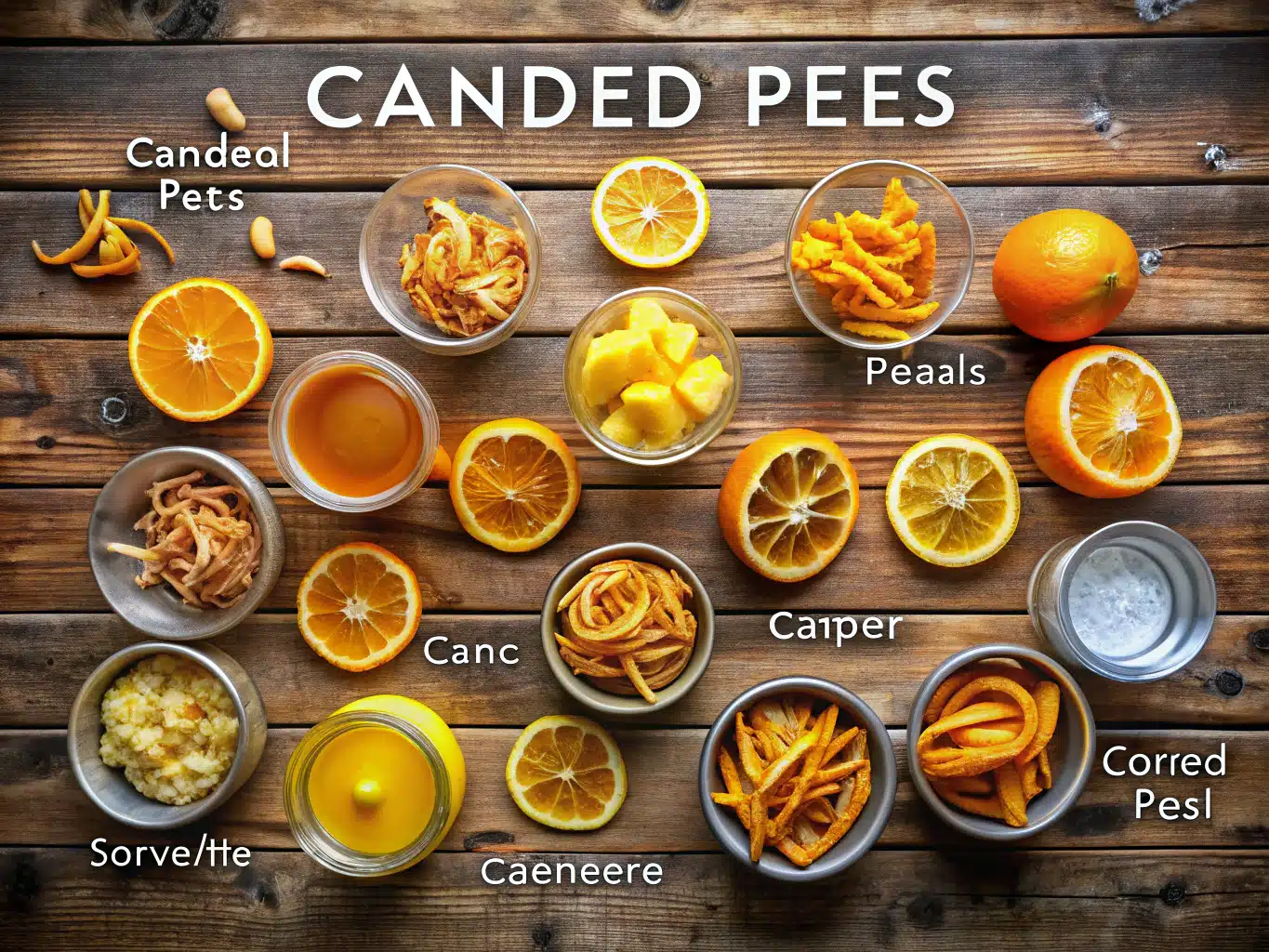
Making CANDIED ORANGE PEELS requires just a handful of pantry staples—and they’re infinitely customizable.
| Ingredient | Details & Substitutions |
|---|---|
| Oranges | Navel oranges work best; wash well to remove any wax |
| Sugar | Regular white sugar gives clean flavor; demerara or turbinado adds depth |
| Water | Used in both boiling and candying stages |
Timing Breakdown
This recipe is simple, but it does ask for some patience.
- Prep Time: 20 minutes (including slicing and blanching)
- Cook Time: 45–60 minutes
- Drying Time: At least 6 hours (overnight preferred)
Yes, it definitely leans slow-cook rather than fast food. But compared to some gourmet candy methods, this process actually takes about 20% less time and no fancy thermometer is needed.
Step-by-Step: Foolproof & Flavorful
- Wash oranges thoroughly and peel with care, leaving as much pith as you like. Thinner pith = less bitterness.
- Slice the peel into thin, uniform strips—about ¼ inch wide.
- Blanch the peels in boiling water for 5 minutes to mellow bitterness. Repeat once more, changing the water each time, for softer flavor.
- In a clean saucepan, combine 1 cup sugar for every 1 cup water. Stir in your peels once the sugar has dissolved fully.
- Simmer gently for 45–60 minutes, stirring occasionally, until peels become translucent and glassy.
- Remove using tongs. Dredge in granulated sugar or lay on a parchment sheet to dry.
- Let them dry overnight, or for at least 6 hours.
For a decadent twist, dip half of each strip into dark chocolate. These pair beautifully with caramel dip or a quick drizzle from this salted caramel sauce.
Sweet Applications and Bold Combinations for CANDIED ORANGE PEELS
From Snacking to Baking: Endless Possibilities
Once they’re cool and slightly chewy, you’ll find endless use cases for your homemade batch. Eat them straight from the jar like old-school candy, or get creative:
- Bake them into scones or muffins
- Toss chopped bits into holiday cookies
- Add to morning oatmeal or yogurt bowls
- Use them as cocktail garnishes—the star in an Old Fashioned or Negroni
- Incorporate into savory dishes like seared duck or glazed ham for elegant depth
They’re also remarkable mixed into cranberry orange relish, where their bright zing balances the tart berries perfectly.
How to Store and Preserve
To keep them fresh and sticky-sweet:
- Store in an airtight glass jar at room temperature for up to 2 weeks
- To extend their life, refrigerate in tight containers up to 2 months
- Freeze for longer storage—just defrost at room temp before using
Humidity is the real enemy. So, if you live in a humid area like I do down in Austin, add a silica packet or toss in some uncooked rice wrapped in cheesecloth to absorb moisture.
Interested in sugar’s role in preservation? Check out this educational resource from The University of Georgia Cooperative Extension to learn how sugar preserves texture and taste in candies like these.
Troubleshooting, Variations, and Growing Your Candy Game
Common Mistakes & How to Avoid Them
Even seasoned chefs make citrus candy mistakes. The most common?
- Overboiling: Leads to bitter results and rubbery texture.
- Overdosing on sugar early: Let the syrup do the heavy lifting, dredge at the end.
- Skipping the double blanch: Shortcuts here mean pungent, unpleasant peel.
Not sure why yours turned out gritty? Double-check your syrup simmer—it should be steady, not bubbling hard. Go gentle and you’ll be golden.
You can also swap in grapefruit, lemon, or lime peels. Grapefruit especially gives a sweet-bitter edge great for pairing with cheeses or nibbling between bites of peanut brittle.
Creative Twists & Flavor Combinations
Infuse your syrup base with spices like clove, cardamom, or a splash of orange blossom water. One popular twist in my house? Candied orange peel with cayenne dusted sugar. Sweet heat!
Use them in toffee bars to cut through the richness or crush them into sugar and rim your glasses for brunch cocktails.
For a fully indulgent tray, combine them with holiday treats and a decadent caramel dip. Play with bold spices or keep it classic—the base recipe gives you the room to experiment your way.
FAQ
How do you make candied orange peel?
Candied orange peel is made by boiling orange peels to soften and remove bitterness, then simmering them in simple syrup until translucent. Finally, you dry them until they’re chewy or crisp, optionally rolling them in sugar.
What do candied orange peels taste like?
They have a sweet, citrusy flavor with a mild bitterness and chewy texture. The blend of sugar and orange oil makes them taste sophisticated but familiar.
What do you use candied orange peel for?
Use them in baked goods like cakes or cookies, as toppings for desserts, in cocktails, or just as snacks. They’re also beautiful on charcuterie boards or dipped in chocolate for candy trays.
What is the best sugar for candied peels?
Granulated white sugar is the best for making them, as it creates a clean, classic taste. You can experiment with turbinado or demerara if you want a more caramel-like finish.
Conclusion
CANDIED ORANGE PEELS bridge nostalgia and creative cooking in the sweetest way possible. Whether you cherish them like my grandmother did or you’re turning them into modern marvels for your next party platter, they remain a deeply underrated gem. With easy-to-follow steps, a bit of patience, and a zest for adventure, you’ll be spinning citrus sunshine into treats that’ll wow anyone lucky enough to taste them.
Now’s the perfect time to grab a few oranges and get simmering. That sugary scent that fills your kitchen? It’s more than a recipe—it’s a memory in the making.
Print
How to Make CANDIED ORANGE PEELS You’ll Actually Want to Eat
- Total Time: 8 hours
- Yield: 2 cups
- Diet: Vegetarian
Description
Sweet, zesty, and nostalgic, these Candied Orange Peels are a gourmet treat that reduces waste while elevating desserts, drinks, and more.
Ingredients
Navel oranges (washed well)
Granulated sugar (or turbinado/demerara)
Water
Instructions
1. Wash oranges thoroughly and peel with care.
2. Slice the peel into ¼ inch strips.
3. Blanch peels in boiling water for 5 minutes. Repeat once with fresh water.
4. In a saucepan, combine 1 cup sugar with 1 cup water. Dissolve completely.
5. Add peels and simmer for 45–60 minutes until translucent.
6. Remove with tongs, dredge in sugar or lay to dry.
7. Let dry overnight or at least 6 hours.
8. Optional: dip half in dark chocolate for extra flair.
Notes
Store in airtight jar up to 2 weeks or refrigerate for 2 months.
For longer shelf life, freeze and thaw before using.
Humidity shortens shelf life—add silica or cheesecloth-wrapped rice if needed.
Swap in grapefruit, lemon, or lime for variations.
Try infusing syrup with spices like cardamom or clove for depth.
- Prep Time: 20 minutes
- Cook Time: 60 minutes
- Category: Candy
- Method: Stovetop
- Cuisine: Southern American
Nutrition
- Serving Size: 2-3 strips
- Calories: 90
- Sugar: 18g
- Sodium: 1mg
- Fat: 0g
- Saturated Fat: 0g
- Unsaturated Fat: 0g
- Trans Fat: 0g
- Carbohydrates: 22g
- Fiber: 1g
- Protein: 0g
- Cholesterol: 0mg
Keywords: candied orange peel, citrus candy, homemade candy, holiday treat, dark chocolate orange