Disclosure: This post may contain affiliate links. As an Amazon Associate, we earn from qualifying purchases—at no extra cost to you.
There’s something soul-satisfying about a well-loved Southern dish that brings people to the table—and collard greens absolutely hold that power. My collard greens recipe is rooted in decades of backyard cookouts, Sunday suppers in Georgia, and quiet weekday evenings in my Austin kitchen where I’m always perfecting old favorites with a modern twist.
This article covers everything you need to know to master this comforting side dish: the ingredients, simmering techniques, cooking times, flavor enhancers, FAQs, and my personal tips passed down through tradition—and taste testing. You’ll also find suggested pairings like skillet cornbread and honey butter biscuits that belong on the plate with your collards. Let’s cook up some heritage, warmth, and bold flavor.
Southern Roots & Why Collard Greens Matter So Much
Born from Tradition, Perfected Over Time
Growing up in a small Georgia town, collard greens weren’t just a dish—they were a rite of passage. Long after Sunday sermons, we’d circle up at my grandma’s long pine table, and somewhere between the cornbread and mashed sweet potatoes, someone would ladle out the collards. They were smoky, briny, and tender—the kind of food that made you pause just to chew slowly.
When I moved to Austin and started building a life around food, I knew I had to introduce others to this tradition. Over the years, my collard greens recipe has gotten touches of creativity while staying true to its roots. I’ve swapped turkey ham hocks for turkey legs and sometimes infused Korean gochugaru spice for a modern bite. Food should feel right—and exciting.
What Makes a Stand-Out Collard Greens Recipe?
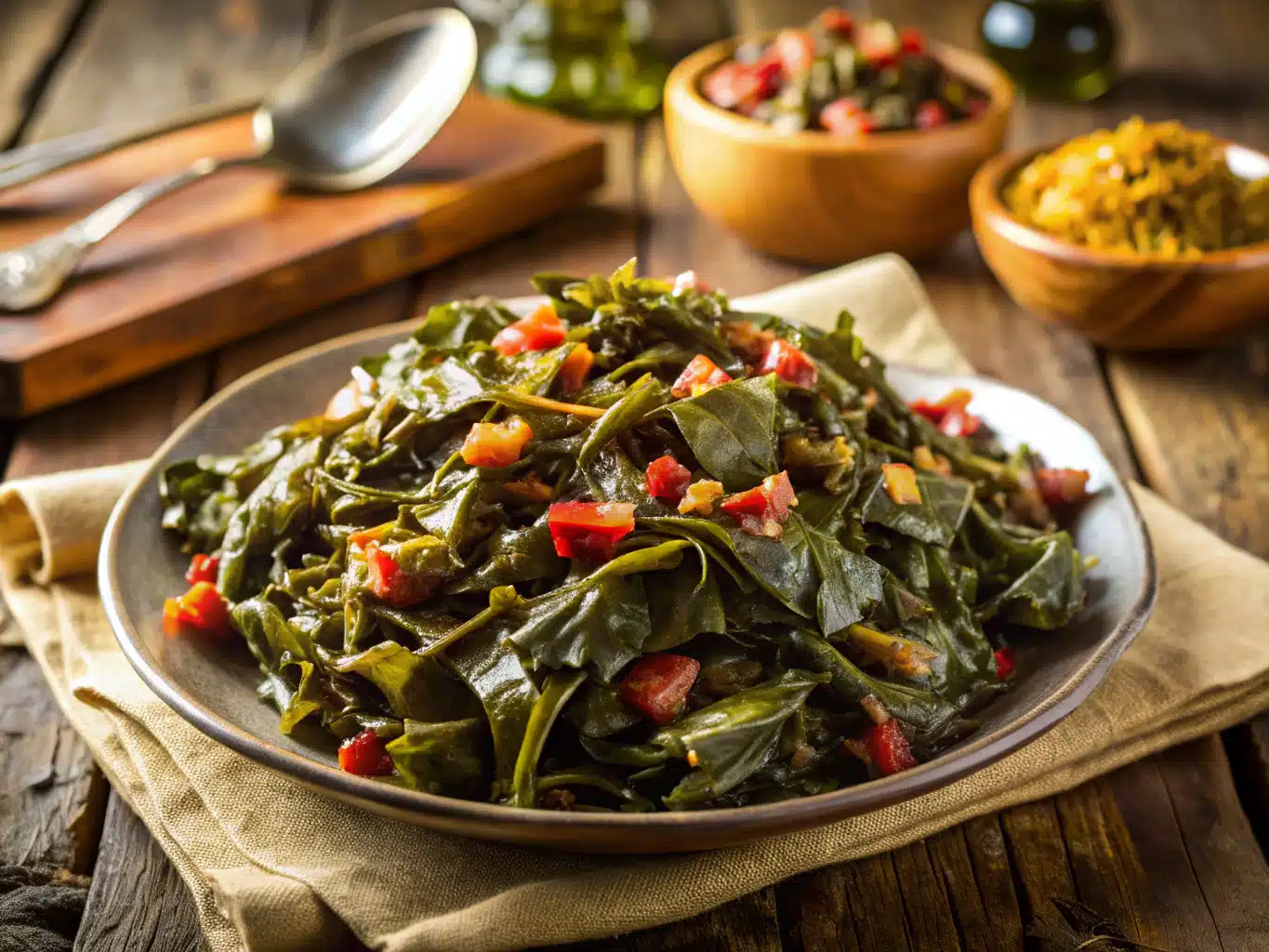
There are greens, and then there are Southern-style collards done right—slow-simmered, beautifully seasoned, and not overly bitter. A standout recipe balances texture with flavor: the greens should be tender, not mushy; the potlikker (brothy juices) should be rich and smoky, begging for cornbread soppin’.
The right collard greens recipe balances savory fats with acid, garlic with onions, and somewhere in there, just enough pepper to make you notice. If you’ve only had collards that made you wrinkle your nose, give this version a shot. It just might redefine your view on cooked greens. And yes, don’t forget that these greens pair wonderfully with garlic mashed potatoes for a touch of creamy contrast.
The Ultimate Collard Greens Recipe Breakdown
Ingredients List: Flavor is in the Foundation
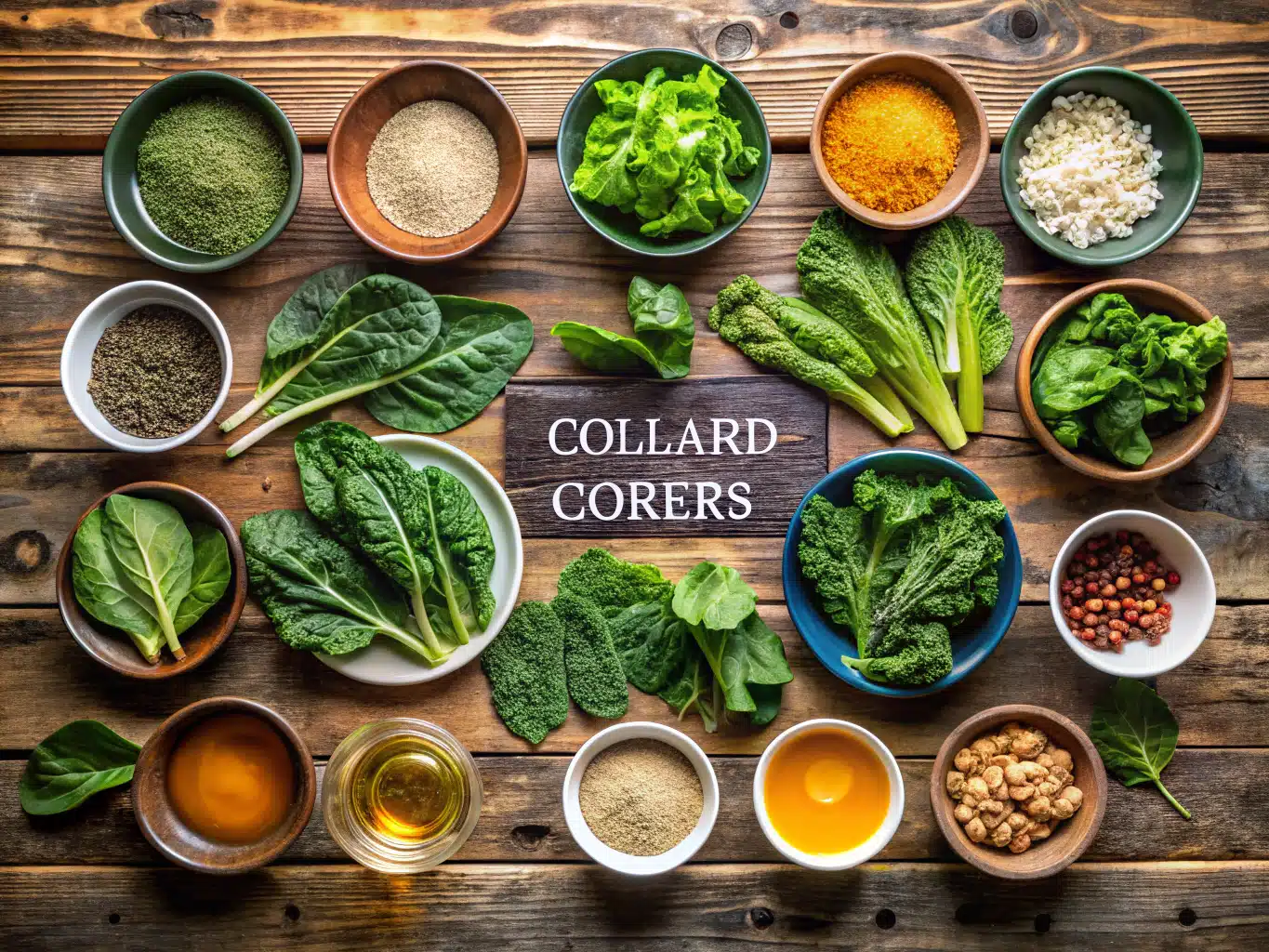
Here’s what you’ll need for this old-school meets modern collard greens recipe:
Main Ingredients
Substitutions
2 lbs fresh collard greens
Mustard or turnip greens (for added sharpness)
1 smoked turkey leg
Smoked tempeh or vegan sausage for a plant-based version
1 yellow onion, chopped
Shallots for a milder flavor
4 garlic cloves, smashed
Garlic paste if in a hurry
1 tbsp apple cider vinegar
White wine vinegar or lemon juice
1 tsp red pepper flakes
Hot sauce, for post-simmer drizzle
Other essentials: salt, black pepper, 4–5 cups stock or water.
I personally use this heavy-duty Dutch oven to lock in slow-cooked flavor and maintain the perfect simmer level throughout.
How Long to Cook—Timing You Need
The prep takes about 15 minutes once everything’s chopped and washed. Braising the greens takes the bulk of the time—anywhere between 75 and 90 minutes. That’s 20% less time than many heavily salted, long-cooked recipes.
Here’s the schedule:
Prep Time: 15 minutes
Simmering/Braising: 75–90 minutes
Total Time: Approx. 1 hour and 45 minutes
Use a collapsible steamer insert if you prefer your greens to steam above broth early in the cooking process—this trick reduces bitterness.
Step-by-Step Instructions That Deliver Flavor
Start by cleaning your greens thoroughly. I use my salad spinner to shake off excess grit effortlessly.
In a large pot or Dutch oven, sauté onions and garlic in oil until translucent. Toss in the smoked turkey leg and let it brown slightly.
Pour in your stock or water, season with salt, pepper, and red pepper flakes. Bring to a light boil, then lower heat.
Add greens in batches as they wilt down into the pot.
Cover and simmer gently for 75–90 minutes, occasionally stirring from the bottom up.
Add apple cider vinegar toward the end for brightness. Test seasoning and adjust salt accordingly.
Bitterness often turns people off from collards. But it doesn’t have to be that way. The balance of acid and fat is what softens that sharpness. That’s why apple cider vinegar is essential—it cuts the bitterness while boosting flavor.
Another trick? Add a slice of turkey bacon fat or a smoked turkey wing early. Slow simmering the greens with this infusion creates smoother, richer greens.
According to USDA guidelines, long simmering not only enhances flavor but also helps break down oxalic acid, which is responsible for some bitterness found in leafy greens like kale and collards.
Choosing the Right Cooking Liquid
Your cooking liquid matters just as much as your seasoning. I prefer low-sodium chicken broth or vegetable stock, but you can get creative. Bone broth introduces added richness. For vegan versions, mushroom stock deepens the umami.
And if you’re using smoked meat or your greens have a tendency to dry, adding 1–2 tbsp of olive oil to the liquid creates silkier potlikker.
Serve with garlic green beans on the side for added freshness in your plate composition.
Collard Greens on Your Table Every Time
Make-Ahead Option & Storage Tips
Yes—you can totally make this collard greens recipe ahead of time. In fact, it tastes even better the next day. Let the greens cool, then store in an airtight container with the liquid. Refrigerate for up to 4 days or freeze for two months.
Reheat by bringing to a slow simmer on the stove. Avoid microwaving—collards love being reheated low and slow.
I keep mine in glass storage containers so the potlikker doesn’t leach into plastic and stays as flavorful as Day 1.
Great Dishes to Serve with Collard Greens
Collard greens are versatile and earthy, and they steal the show with the right companions. My top contenders?
Meat-wise, you can’t go wrong with glazed turkey ham, beef chops, or fried catfish. For vegetarian lovers, grilled portobellos or BBQ tofu make hearty, smoky companions.
Frequently Asked Questions (FAQs)
What ingredients go in collard greens?
Traditional recipes include collard greens, smoked meat, onions, garlic, broth, vinegar, salt, and pepper. Adjust based on preference.
What takes the bitterness out of collard greens?
Slow cooking with vinegar, onion, garlic, and fat softens bitterness. You can also blanch greens quickly before braising to help remove extra bitterness.
How long do collard greens need to be cooked?
They should simmer for about 75–90 minutes for full tenderness. Any less and the stems stay tough; too much longer risks mushy outcomes.
What’s the best cooking liquid for collard greens?
Low-sodium chicken broth or homemade vegetable stock is ideal. They infuse flavor and prevent the greens from tasting watered down.
Conclusion: Greens That Tell Stories
This collard greens recipe is more than just a side—it’s history, love, and flavor packed into every forkful. Whether you grew up eating them on Sundays or you’re trying them for the first time, these greens offer warmth and connection with every bite.
Don’t forget the cornbread. Don’t forget the memories. Serve it with soul, and make it your own.
A Southern classic rooted in Georgia tradition, this recipe blends smoky meats, slow braising, and tangy vinegar to create tender, rich collard greens that belong on every Sunday table.
Ingredients
Scale
2 lbs fresh collard greens
1 smoked turkey leg
1 yellow onion, chopped
4 garlic cloves, smashed
1 tbsp apple cider vinegar
1 tsp red pepper flakes
Salt and black pepper to taste
4–5 cups stock or water
Optional: olive oil, hot sauce
Instructions
1. Clean greens thoroughly.
2. Sauté onions and garlic in a Dutch oven until translucent.
3. Add smoked turkey leg and brown slightly.
4. Pour in stock, season with salt, pepper, and red pepper flakes.
5. Bring to a boil, then reduce to simmer.
6. Add greens in batches as they wilt.
7. Cover and simmer for 75–90 minutes, stirring occasionally.
8. Add vinegar at the end for brightness.
9. Adjust seasoning and serve hot.
Notes
For vegetarian version, use smoked tempeh and vegetable stock.
Add olive oil for silkier broth.
Tastes even better the next day—store in liquid for best results.
Pairs well with cornbread, mashed potatoes, and grilled mushrooms.