
Disclosure: This post may contain affiliate links. As an Amazon Associate, we earn from qualifying purchases—at no extra cost to you.
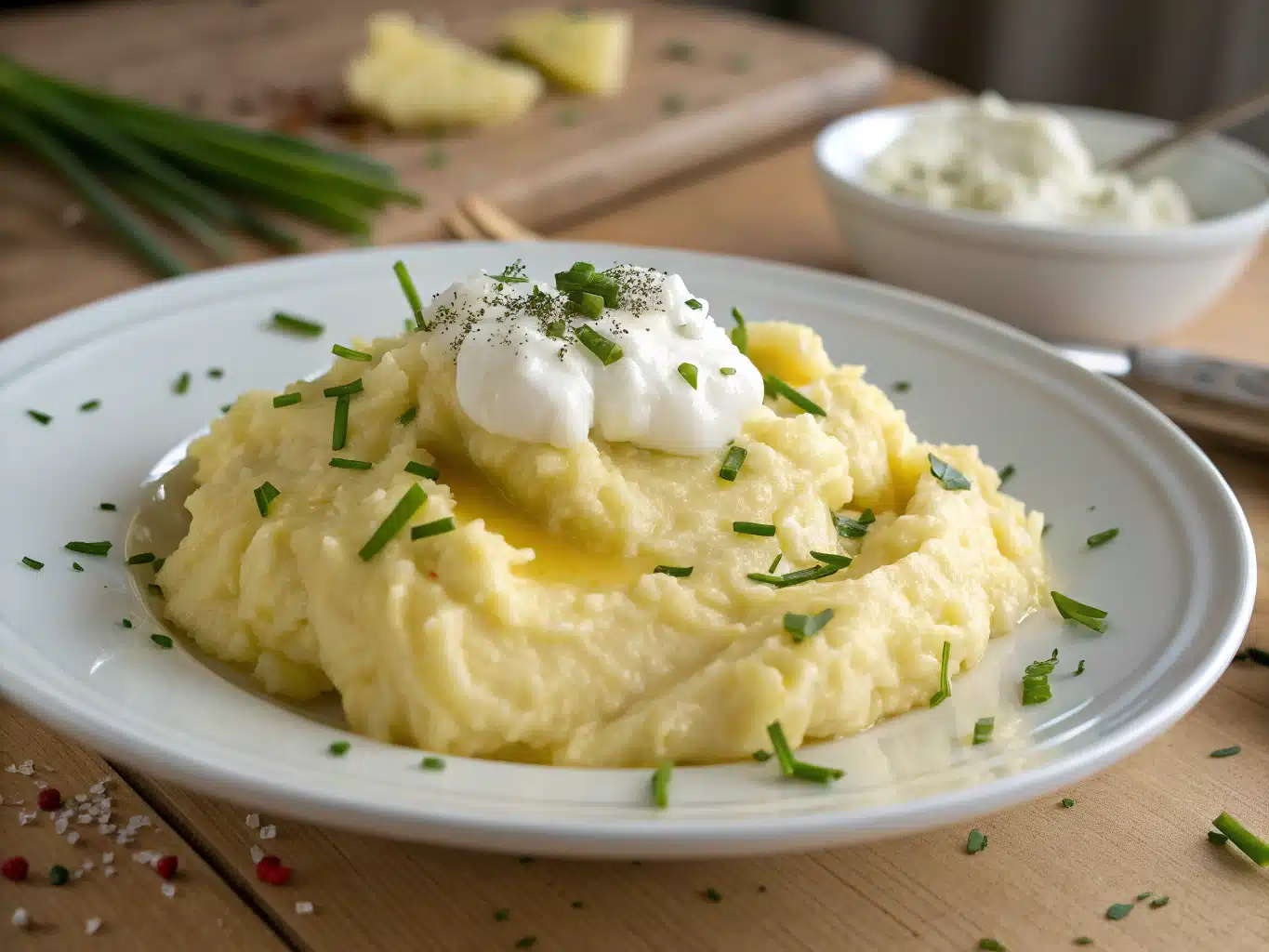
From the moment I could balance on a step stool in my mama’s kitchen back in Georgia, mashed potatoes held a place on our dinner table like a well-worn family heirloom. I remember Sunday afternoons filled with the scent of rosemary chicken, sweet tea on the table, and that large wooden bowl piled high with creamy, buttery clouds of mashed potatoes that vanished faster than the biscuits. Later, when I studied in New Orleans, I learned how to give simple dishes more flair—but mashed potatoes? They didn’t need fixing. They just needed love. Whether I’m experimenting with garlic-forward potato dishes or turning up the volume with herb-infused butter, I always come back to this classic. Today, I’m sharing my ultimate mashed potatoes method—perfect for holidays, weeknights, or anytime you crave comfort on a spoon.
Let’s dig into the texture, flavor, and delicious family history of mashed potatoes and dive deep into how you can make yours spectacular every single time.
What Makes Mashed Potatoes So Comforting?
A Culinary Hug from the Heartland
Mashed potatoes are the poster dish for American comfort food—and for good reason. Creamy, rich, and endlessly customizable, they’re a dish that adapts to your mood and your meal. Some people love them silky smooth; others swear by a little rustic texture. But whatever camp you’re in, a good batch of mashed potatoes can instantly elevate a meal. When I started experimenting for friends in Austin, I realized these humble spuds could be dressed up in ways I’d never imagined. A dollop of horseradish? A swirl of kimchi? Why not! The core soul of mashed potatoes doesn’t change, and that makes them something close to sacred on the table.
The Building Blocks of a Classic
To make truly sensational mashed potatoes, it helps to first understand the components that drive their flavor and structure. Start with the right type of potato—Yukon Golds or Russets are your best bet. They strike that perfect balance between creamy and starchy, which gives your mash a great foundation. Next, it’s all about choice: butter or olive oil? Whole milk or heavy cream? Garlic or rosemary? The thing is, everyone has an opinion—and that’s what makes mashed potatoes so fun. You can even create fusion sides, like serving your fluffy potatoes next to richly seasoned beef stew or pairing them with velvety brown gravy and watch those comfort levels go off the charts.
Recipe: Creamy, Buttery Mashed Potatoes with Optional Twists
Ingredients List
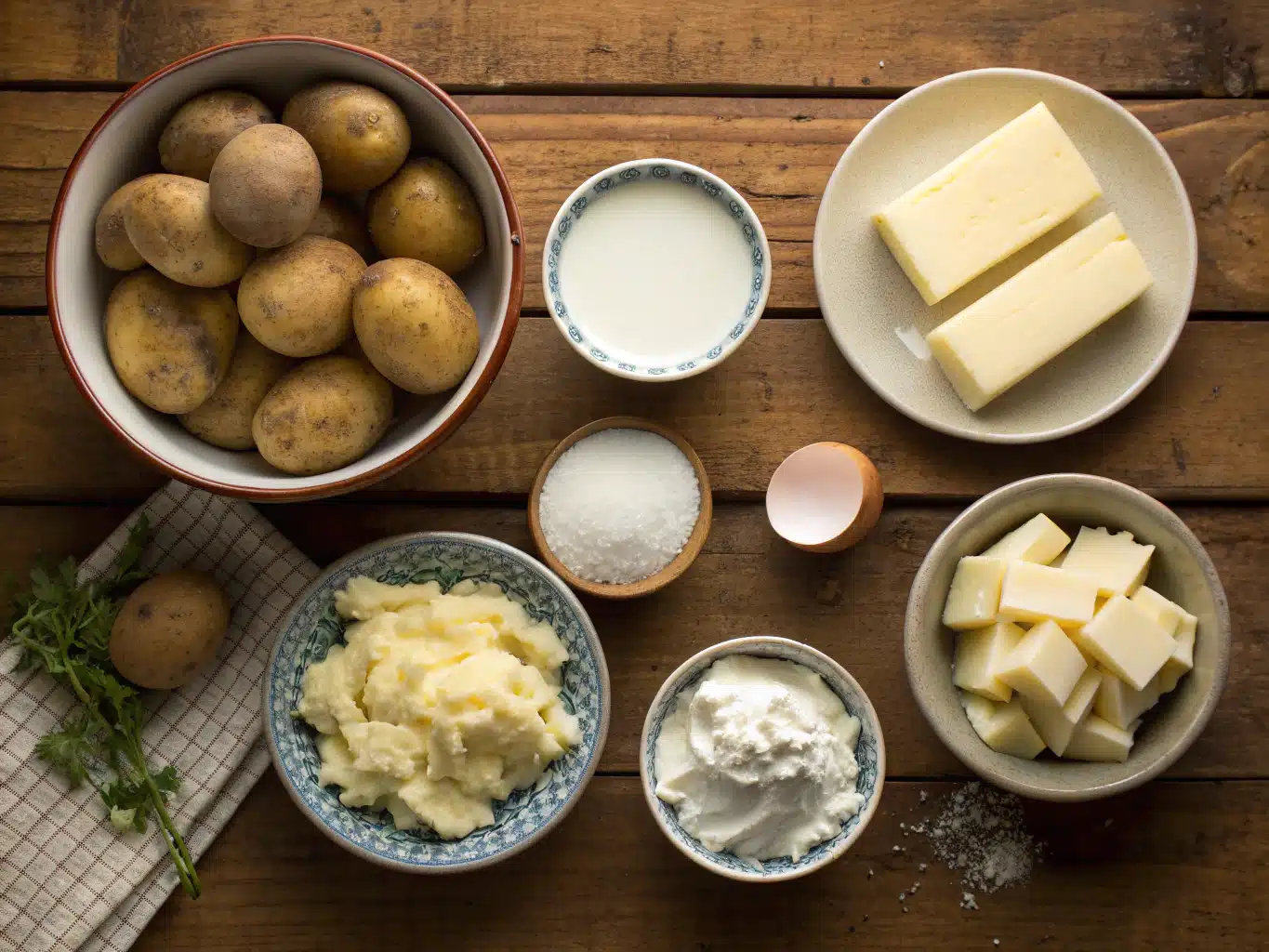
Here’s what I grab when I’m whipping up a big comforting bowl of mashed potatoes. These ingredients are pantry-friendly, and you probably already have most on hand.
| Ingredient | Notes/Substitutions |
|---|---|
| 2.5 lbs Yukon Gold or Russet potatoes | Yukon for a creamier taste, Russet for fluffier texture |
| 1/2 cup unsalted butter | Use plant-based butter if vegan |
| 3/4 cup whole milk or heavy cream | Oat milk or half-and-half are great too |
| Salt to taste | Always taste as you go |
| Black pepper | Freshly ground for best flavor |
| Optional: roasted garlic, cream cheese, chives | For elevated variations |
Timing and Meal Planning Tips
A good mashed potato recipe doesn’t need to take all afternoon. Here’s how the timeline breaks down:
| Step | Time Required |
|---|---|
| Peeling and chopping potatoes | 10 minutes |
| Boiling potatoes | 15–20 minutes |
| Draining and mashing | 5–7 minutes |
Total elapsed time: about 30–35 minutes start to finish—a simple and fast prep, even on busy weeknights.
Step-by-Step Instructions
- Wash, peel, and cube your potatoes into uniform chunks. This helps them cook evenly and avoid lumps.
- Place potatoes in a large pot and cover with cold water. Salt the water generously before bringing it to a boil.
- Boil for 15 to 20 minutes until potatoes are easily pierced with a fork.
- Drain immediately and return the potatoes to the hot pot to evaporate any excess moisture.
- Add butter and warm milk or cream. I like warming my liquids before adding—it keeps the mash extra creamy and avoids gluey texture.
- Mash using a ricer for fluffier results, or use a masher if you prefer it rustic.
- Season to taste with salt and black pepper. Stir in optional flavors like roasted garlic or shredded Parmesan for depth.
- Serve warm, maybe with a drizzle of herb butter or next to some parmesan potatoes for variation.
Making Mashed Potatoes Better Than Ever
The Science of Great Mash
The keyword to getting your mashed potatoes just right is starch management. Overworking your cooked potatoes can release too much starch and turn that silky mash into glue. That’s why choosing the right mashing method matters. Potato ricers give you fluffier results because they handle the starch more gently, whereas hand mashers give you control and texture. According to the U.S. Department of Agriculture, potatoes are also a solid source of potassium and vitamin C, so they’re not just a comfort food—they’re a hearty side with real nutritional value.
Flavor Tweaks You Should Try
Once you’ve mastered the base, flavor additions are where you can get creative. Try white truffle oil for an upscale twist, or swirl in cream cheese for added richness. A sprinkle of smoked paprika or a handful of chopped scallions can completely refresh the profile. Serve these next to corn casserole or layer them under creamy meatloaf and you’ve got instant satisfaction. Better yet, use leftovers to make a mashed potato-topped shepherd’s pie—total leftover redemption.
Versatility Beyond the Basics
Leftover Magic: Remakes You’ll Love
What do you do with leftover mashed potatoes? Oh, you’re in for a treat. Roll them into balls, stuff ’em with cheese, and air-fry for crispy delights inspired by these air fryer potatoes. Or whisk a cup into your next batch of soup or bread dough for moist texture. You can even turn them into the base layer for a hearty hashbrown casserole.
Pairing Ideas That Elevate the Plate
Mashed potatoes play well with almost anything: roasted chicken, grilled salmon, veggie medleys, even pulled beef. Think of them like a stage—and let the main performance shine. They’re especially good at soaking up rich sauces, making them the perfect landing zone for gravy or stew. Whether you’re going Southern soulful or trendy-fusion, the right pairing can make mashed potatoes feel brand new.
FAQs About Making Mashed Potatoes
💬 How to make the perfect mashed potato?
Start with starchy potatoes like Russets or Yukon Golds. Boil until fork-tender, drain well, then mash with warm butter and milk to keep the texture light and fluffy. Don’t over-mix!
💬 How long should I boil my potatoes for mashed potatoes?
Depending on size, about 15–20 minutes. You should be able to easily pierce them with a fork or knife.
💬 Should you use milk or cream in mashed potatoes?
Both work! Whole milk gives a classic flavor; cream adds richness. Warm your liquid before adding for best results.
💬 What’s the best liquid for mashed potatoes?
Whole milk or heavy cream are traditional, but broth, buttermilk, or even plant-based alternatives work well, depending on your goal for flavor and texture.
Conclusion
Mashed potatoes aren’t just a side—they’re a deeply personal comfort food. For me, they carry memories of family, Sunday feasts, and innovation in my kitchen here in Austin. Whether you’re sticking to the classics or experimenting with bold new flavors, these golden piles of creamy goodness will never steer you wrong. Master the technique, get creative with your ingredients, and honor the simplicity behind what makes mashed potatoes so timeless. After all, the best recipes are the ones that bring people together, one spoonful at a time.