
Disclosure: This post may contain affiliate links. As an Amazon Associate, we earn from qualifying purchases—at no extra cost to you.
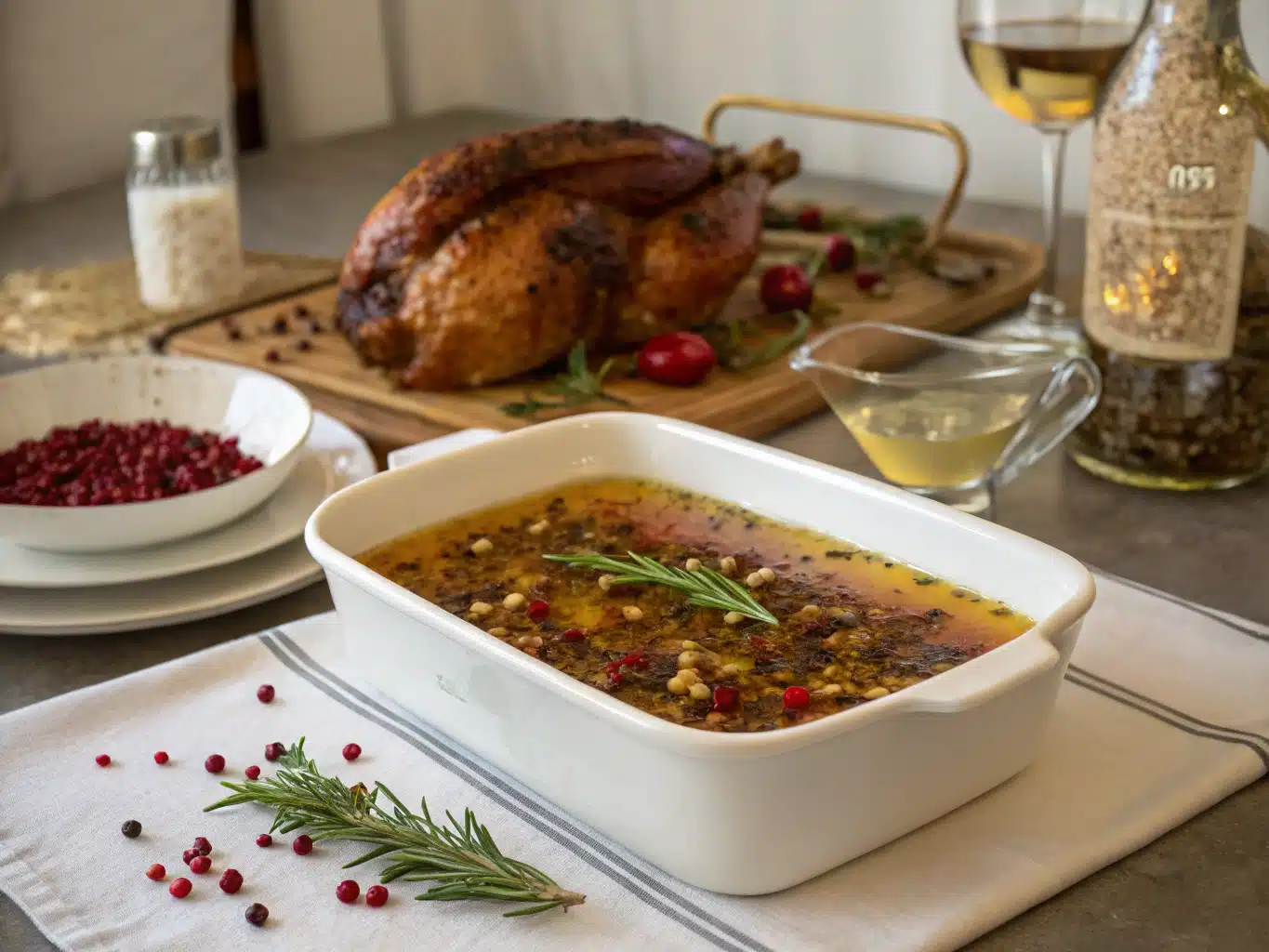
No dish defines togetherness quite like a perfectly brined Thanksgiving turkey. I still remember my first attempt at turkey brine—it was one of those sticky November afternoons back in Austin when the windows fogged up with the scent of citrus and rosemary. I had just returned from a farmer’s market haul and wanted to try something different. I tossed in oranges, fresh thyme, bay leaves, and a generous handful of kosher salt. No measuring spoons. No exact science. Just instinct, memory, and curiosity. The result? A turkey so moist and flavorful, my friends thought it came straight out of a Southern food magazine.
In this article, you’ll learn everything you need to know to master the art of turkey brine—from why it works to the best tips for juicy, deeply seasoned meat. We’ll also dive into brine formulas, preparation times, and key tricks that separate good turkey from unforgettable turkey. By the end, you’ll have a turkey that not only steals the show but tells a story.
Why Brining a Turkey Changes Everything
Brining: It’s Not Just Saltwater
When folks talk about turkey brine, they often imagine a giant bucket of salty water. But brining is more than that. It’s a technique that uses osmosis (yep, high school science sneakily helping out here) to infuse flavor and lock in moisture. Whether you’re roasting, smoking, or deep-frying, a good brine can keep your bird tender and seasoned from the inside out.
In my kitchen, every turkey gets a bath before hitting the oven. Sometimes it’s a classic brine of sea salt and brown sugar; other times, I lean festive with apple cider, cloves, and cinnamon sticks. Either way, the transformation is dramatic: meat stays juicy, the skin crisps beautifully, and every bite bursts with depth.
Wet vs. Dry Brine: Let’s Break It Down
There are two main schools of brining: wet and dry. Wet brine involves fully submerging your turkey in a seasoned liquid blend, while dry brine skips the water, instead coating the bird in a salt-herb rub that draws moisture out and back in, along with lashings of flavor.
Here’s a quick comparison:
| Brining Type | Pros | Cons |
|---|---|---|
| Wet Brine | Adds plenty of moisture, perfect for roasting | Can be messy; needs lots of fridge space |
| Dry Brine | Crispier skin, easier to prep | Requires more time and precision |
If you prefer bold-flavored, juicy turkey without the soggy skin, dry brine might be more your speed. But if you want forgiveness and flexibility, especially for novice cooks, a wet turkey marinade is a great first choice.
How to Make the Best Turkey Brine from Scratch
Ingredients List for the Perfect Brine

A standout turkey brine balances saltiness, sweetness, acidity, and aromatics. Here’s all you need (with options for swapping based on what’s in your pantry):
- 1 gallon water (or half water, half apple cider for depth)
- 3/4 cup kosher salt (never table salt—it’s too dense)
- 1/2 cup brown sugar (or maple syrup for a twist)
- Zest and juice of 2 oranges
- 1 head garlic, cut in half
- 2 tablespoons black peppercorns
- 4 bay leaves
- 5 sprigs fresh thyme
- 2 sprigs rosemary
- Optional add-ins: whole cloves, cinnamon sticks, jalapeño slices (if you’re feeling bold!)
Want to take it up a notch? Try using homemade turkey rub in your dry brine. It adds complexity with zero hit to effort.
Timing: Brining Takes Patience but Pays Off
Plan ahead. The ideal turkey brine time depends on the size of your bird:
- 12–14 lb turkey: 12–16 hours
- 14–18 lb turkey: 18–24 hours
- 18–20 lb turkey: up to 36 hours
As a rule of thumb, never exceed 48 hours, or the meat may turn mushy and oversalted. If you’re short on time, even 8 hours helps.
Here’s a handy timeline:
| Turkey Size | Brine Time |
|---|---|
| Up to 14 lbs | 12–16 hours |
| 14–18 lbs | 18–24 hours |
| 18–20 lbs | Up to 36 hours |
Step-by-Step Instructions for a Flavorful Brine
- In a large stockpot, combine water, salt, and sugar. Warm slightly over medium heat, just until the salt dissolves. Don’t boil.
- Add aromatics—citrus, herbs, peppercorns—and cool to room temperature.
- Place turkey in a brining bag or stockpot. Pour brine over the turkey, ensuring it’s fully submerged. Weigh it down with a plate, if necessary.
- Refrigerate for recommended time based on bird size.
- When ready, remove turkey, rinse under cold water, and pat dry completely. This helps crisp the skin.
- Let sit uncovered in fridge for 4–6 hours to dry out the exterior before roasting.
Want to keep things extra moist? Pair your brined turkey with this savory gravy recipe or try this copycat turkey gravy twist.
Beyond the Brine: Tips for the Best Bird Yet
What Is the Formula for Turkey Brine?
The “brine formula” is surprisingly simple: 1 cup kosher salt per gallon of liquid. That liquid can be water, broth, juice—just maintain the same salt-to-liquid ratio. From there, herbs and aromatics are purely expressive.
According to the USDA food safety guidelines (an excellent external resource), always brine your turkey in the refrigerator, never at room temperature. Safety matters just as much as flavor.
Once brined, match your flavors with smart sides. A bright, herbaceous homemade stuffing or a savory sausage stuffing recipe levels up the entire table.
My Twist: Small-Batch Turkey Sliders
Got leftovers? Don’t toss that turkey! Slice it thick, lay it over toasted rolls, and douse it in cranberry compote and melted brie for the ultimate turkey sliders nobody will forget. It’s a crowd-pleaser for game days or lazy Sundays alike.
Pair it with leftover Thanksgiving stuffing recipes crisped in a skillet and you’ve got new magic from yesterday’s feast.
Questions You Might Be Asking
How long should I brine a turkey?
Most chefs recommend brining between 12 and 24 hours, depending on turkey size. Less than 8 hours adds minimal benefit; more than 48 hours risks making the texture spongy.
What is the downside of brining turkey?
If done improperly, brining can lead to overly salty or watery meat. Always measure your salt and stick to the formula: 1 cup kosher salt per gallon of liquid.
What is the best thing to brine your turkey in?
Food-safe brining bags are the easiest, especially if fridge space is limited. Otherwise, a sanitized stockpot or large cooler—with plenty of ice and supervision—also works.
What is the formula for brine?
1 gallon liquid + 1 cup kosher salt + ½ cup sweetener + aromatics. Simmer slightly, cool completely, then submerge your bird.
Final Thoughts: Turkey That Tells a Story
Brining a turkey isn’t just about flavor—it’s a ritual. It makes you pause, plan, and connect with your ingredients on a deeper level. Whether you’re prepping Thanksgiving dinner or just craving a Sunday roast with soul, a good turkey brine brings magic to the table.
Let the kitchen be your canvas. Play with spices. Explore new citrus. Share stories over simmering pots. When that first juicy bite melts in your guests’ mouths, you won’t just be proud—you’ll be part of their next holiday story too.
So go ahead. Brine bold. Serve proud. And always make food that feels like home.
Want more tips? Explore everything from sauces to stuffing in our growing recipe hub.